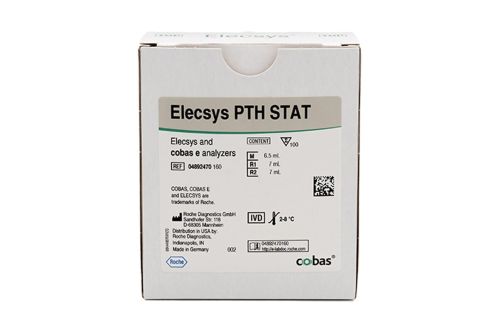
Elecsys PTH STAT is a rapid electrochemiluminescence immunoassay (ECLIA) developed by Roche Diagnostics for the quantitative determination of intact parathyroid hormone (PTH) in human serum and plasma.
It is specifically designed for situations requiring a fast turnaround, such as intraoperative monitoring during parathyroid surgery, where surgeons need to confirm a significant drop in PTH levels to ensure successful removal of hyperactive parathyroid tissue.
Clinical Applications
- Differential Diagnosis: Used to distinguish between causes of hypercalcemia (high calcium) and hypocalcemia (low calcium).
- Intraoperative Use: Clinicians use the 9-minute result to follow the “Miami criteria” or similar protocols, confirming a >50% drop in PTH from baseline after removing a suspected adenoma.
- Chronic Kidney Disease (CKD): Monitoring mineral and bone disorders in patients with renal failure.
Manufacturer: Roche Diagnostics GmbH
Addresses:
- Sandhofer Straße 116, 68305 Mannheim, Germany
Product Prices:
Pricing for the Elecsys PTH STAT assay depends on whether you are purchasing the commercial reagent kits for laboratory use or paying for a clinical diagnostic test as a patient.
Reagent & Kit Pricing (Laboratory Use)
Laboratory kit prices vary by region and volume contracts, but list prices from established suppliers provide a baseline:
- Elecsys PTH STAT Reagent Kit (100 Tests): Typically ranges from €181 to €205 per kit.
- Elecsys PTH STAT CalSet: Necessary for calibration, this set (4 x 1 mL) is priced around €42 to €46.
- Bulk/Wholesale: Some online distributors list larger packages at significantly higher prices (e.g., ~€18,125 for bulk batches), while specialized medical marketplaces may offer individual 100-test packs.
Free References
Validation and implementation of an intraoperative parathyroid hormone assay and workflow: practical advice for endocrine surgery centres
Personalized parathyroid hormone therapy for hypoparathyroidism: Insights from pharmacokinetic-pharmacodynamic modelling
Leave a Reply