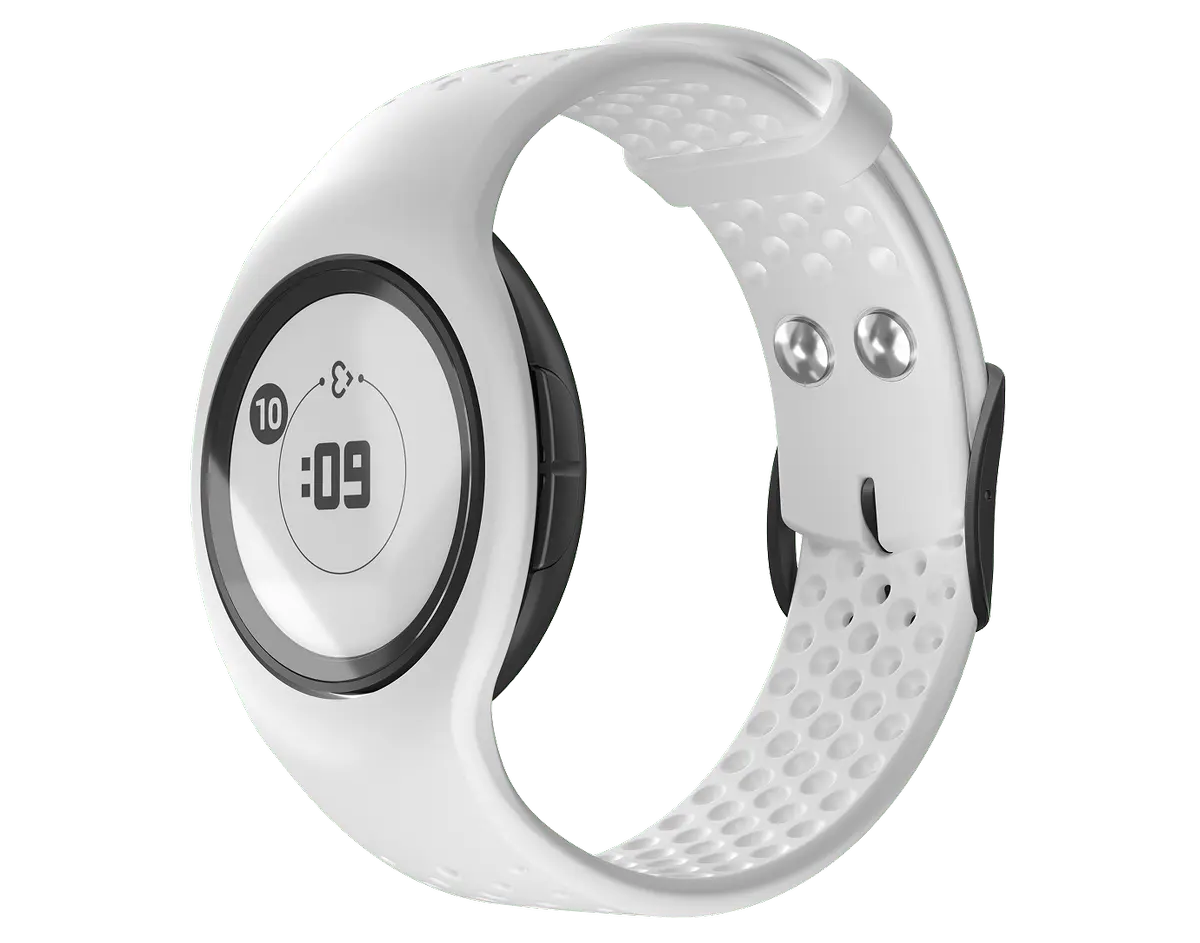
The Empatica EmbracePlus is a medical-grade smartwatch designed for continuous physiological monitoring in clinical research and patient care, including FDA-cleared epilepsy monitoring. It is developed by Empatica, an MIT spin-off, and co-designed with partners including NASA.
Key Features & Specifications
- Sensors: The EmbracePlus is equipped with advanced sensors for comprehensive data collection:
- Ventral EDA (Electrodermal Activity) sensor: Detects subtle changes in skin electrical conductance related to autonomic stress.
- Advanced optical PPG (Photoplethysmogram) sensor: Measures heart rate (HR) and heart rate variability (HRV).
- High-precision 3D accelerometer and gyroscope: Records raw acceleration and angular velocity data for activity and movement tracking.
- Digital temperature sensor: Reads peripheral skin temperature.
- Display: Features an always-on E Ink display with a digital clock face, reminders, and event indicators.
- Design & Durability: It is waterproof (IP67 standard) and features a comfortable, swappable strap made of hypoallergenic material (silicone, fabric, or vegan leather options).
- Battery & Charging: Offers up to 7-14 days of battery life. A unique on-wrist, patent-pending charging pod allows the device to be charged without being removed from the wrist, which helps ensure continuous data collection.
- Connectivity & Data: Uses Bluetooth 5 for fast data streaming to a paired smartphone app (Care Lab or EpiMonitor App), which then securely transfers data to the Empatica Cloud for analysis and review.
- Regulatory Approval: The device is 510(k) FDA-cleared as part of the Empatica Health Monitoring Platform and CE-certified as a class IIa medical device
Primary Use Cases
- Clinical Research: Researchers use the EmbracePlus and the Empatica Health Monitoring Platform for longitudinal studies and clinical trials, with access to raw data and validated biomarkers for conditions like sleep apnea and substance use disorder.
- Epilepsy Monitoring: When paired with the EpiMonitor app, the EmbracePlus is FDA-cleared to detect possible generalized tonic-clonic seizures and automatically alert caregivers via phone calls and SMS with the user’s location.
- Astronaut Health: The device was co-designed with NASA’s Human Research Program and chosen to monitor astronaut health on deep space missions
Manufacturer: Empatica
Addresses:
- United States
- Cambridge, Massachusetts
- Address: 1 Broadway, 14th Floor, Cambridge, MA 02142, United States
- Phone Number: +1 (866) 739-2049
- Italy
- Location: Milan, Italy
- Address: Via Stendhal 36, 20144 Milano (MI), Italy
- Phone Number: +39 02 36165068
Product Prices
The Empatica EmbracePlus is primarily sold through the Empatica online store, often as part of a bundle or subscription plan.
- EpiMonitor (for individuals with epilepsy): There is a one-time device fee of $399, plus a monthly subscription fee starting at $15.90. A prescription is required for US customers.
- Research Platforms (for academic use): Pricing varies for research plans and typically includes the device, data access via the Empatica Cloud, and access to the Care Portal for study management.
Free References
Prospective clinical validation of the Empatica EmbracePlus wristband as a reflective pulse oximeter
LOTUS Software to Process Wearable EmbracePlus Data
Quality in Question: Assessing the Accuracy of Four Heart Rate Wearables and the Implications for Psychophysiological Research
Using a Smartwatch to Evaluate Subjective Ratings of Driving Functions
Wearable Solutions for Mental Stress Monitoring
Emotion-aware Wearable Devices Integrating Biosignals
Predicting Cognitive Assessment Scores in Older Adults with Cognitive Impairment Using Wearable Sensors
Assessing Heart Rate Variability Responses to Food Cues and Cognitive Stress: A Comparative Study of a Wearable Device and ECG
ADHD Remote Technology study of cardiometabolic risk factors and medication adherence (ART-CARMA): a multi-centre prospective cohort study protocol
Analysis of electrodermal activity signal fluctuations prior to migraine onset
Leave a Reply