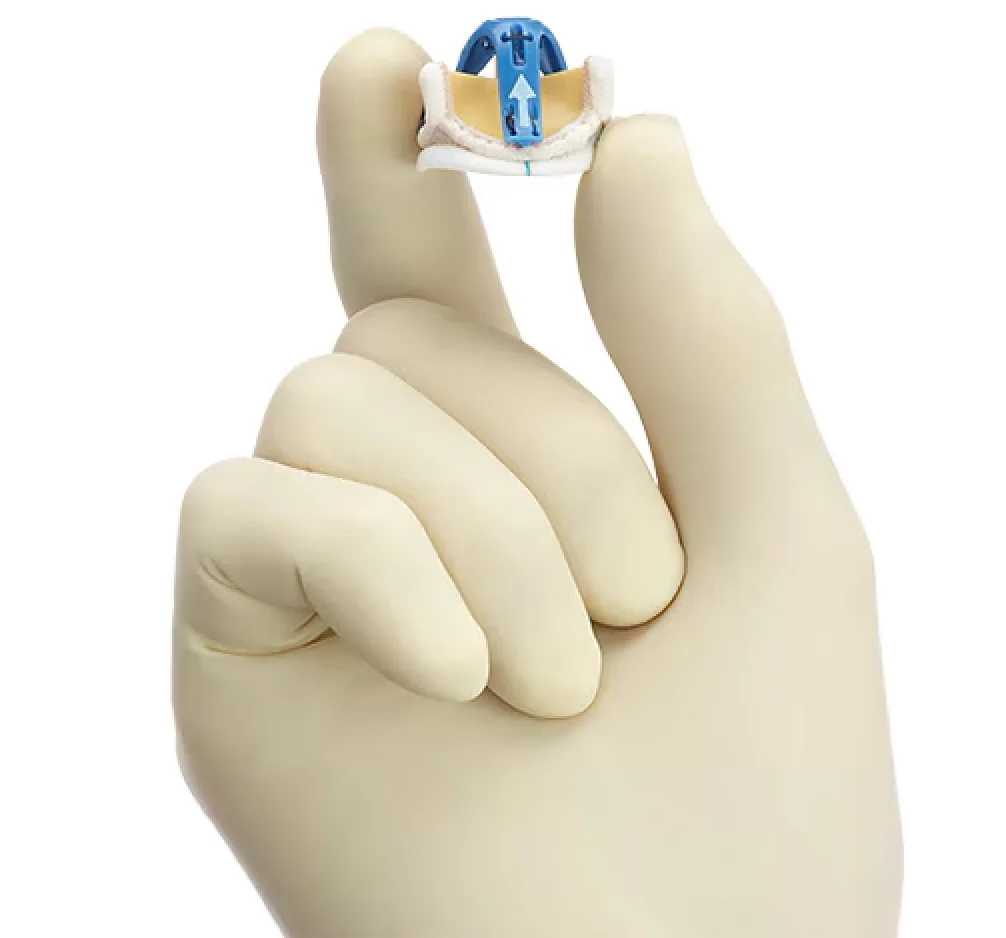
The Medtronic Avalus Ultra™ bioprosthesis is a next-generation surgical aortic tissue valve made from bovine (cow) pericardial tissue, designed to replace a diseased, damaged, or malfunctioning native or prosthetic aortic valve.
Building on the clinical foundation of the original Avalus™ valve, it is engineered for easier surgical implantation, strong blood flow (hemodynamics), and long-term patient management—specifically accommodating potential future transcatheter valve-in-valve (TAV-in-SAV) procedures.
Key Design Features
- Tissue & Durability. Constructed with laser-cut bovine pericardial leaflets treated with Medtronic’s AOA™ (alpha-oleic acid) anti-calcification process to resist tissue calcification and wear over time.
- Nondeformable PEEK Frame. Features a polyetheretherketone (PEEK) circular base frame and flexible stent posts that resist deformation, maintaining a consistent circular opening for optimal blood flow and uniform leaflet closure.
- Low Profile & Sewing Cuff. Designed with a lower valve profile and a soft, pliable sewing cuff to simplify suture placement, improve seating in the aortic annulus, and reduce the risk of paravalvular leaks.
- Future Valve-in-Valve Readiness. Includes a radiopaque platinum-iridium coil and a tantalum badge. These markers make the valve clearly visible under fluoroscopy (X-ray) if a patient ever needs a minimally invasive transcatheter aortic valve replacement (TAVR) inside the surgical valve later in life.
- Large Internal Diameter. Engineered with internally mounted leaflets to maximize the effective orifice area (EOA) for unobstructed blood flow.
Specifications & Clinical Background
- Available Sizes. 19 mm, 21 mm, 23 mm, 25 mm, 27 mm, and 29 mm (Model series 400U19–400U29).
- MRI Status. Classified as MR Conditional (safe for MRI scans under specific tested conditions).
- Clinical Foundation. Supported by 10 years of platform experience and data from the PERIGON Pivotal Trial (evaluating over 1,100 patients), which demonstrated high rates of freedom from structural valve deterioration (99% at 7 years) and stable hemodynamic performance.
- Potential Risks. As with any surgical heart valve replacement, potential adverse events include thromboembolism (blood clots), bleeding (often related to anticoagulation), paravalvular leak, endocarditis (infection), structural valve deterioration, and the potential need for reoperation.
Availability and Pricing
The Medtronic Avalus Ultra™ bioprosthesis is commercially available in both the United States and Western Europe, while its exact unit price is confidential and negotiated directly between hospitals and Medtronic.
Regulatory & Commercial Availability
- United States. Approved by the FDA (under PMA P170006) in January 2024 and commercially launched across the U.S. in April 2024.
- Europe. Launched commercially in Western Europe in October 2024 following CE Mark certification, with the first European implants performed at the Heart Center in Leipzig, Germany. It is listed in Medtronic’s European product catalog (e.g., Medtronic Ireland/Europe), though rollout across non-EU or Eastern/Southeastern European markets depends on local regulatory clearance and hospital tender cycles.
Pricing & Cost Structure
Medtronic does not publish public list prices for surgical heart valves. Pricing operates differently depending on whether you are a hospital buyer or a patient:
- Hospital Device Cost (B2B). Surgical aortic bioprostheses are sold through confidential hospital supply contracts, group purchasing organizations (GPOs) in the U.S., or national/regional health tenders in Europe. Depending on volume discounts and regional reimbursement caps, contemporary stented bovine pericardial valves typically cost hospitals roughly $4,000 to $7,500 USD in the U.S. and €2,500 to €5,000 EUR in Europe, though exact contract prices for the Avalus Ultra are proprietary.
- Patient Out-of-Pocket Cost. Patients are almost never billed for the standalone valve; it is bundled into the overall Surgical Aortic Valve Replacement (SAVR) procedure:
- United States. Covered by Medicare (bundled under MS-DRG codes for cardiac valve procedures) and private health insurers when medically necessary. Out-of-pocket costs depend entirely on your insurance deductible, coinsurance, and out-of-pocket maximum.
- Europe. Typically covered in full through statutory public health insurance or national health systems at accredited cardiac surgery centers.
Leave a Reply